
Roeland Park, KS
Roof Flashing Repair in Roeland Park, KS
Flashing handles the places where shingles meet a wall, chimney or roof opening. A repair needs to rebuild that water path and reconnect the material around it.
Free roof inspections. Repair and replacement options explained.
Rebuild the Joint That Let Water In
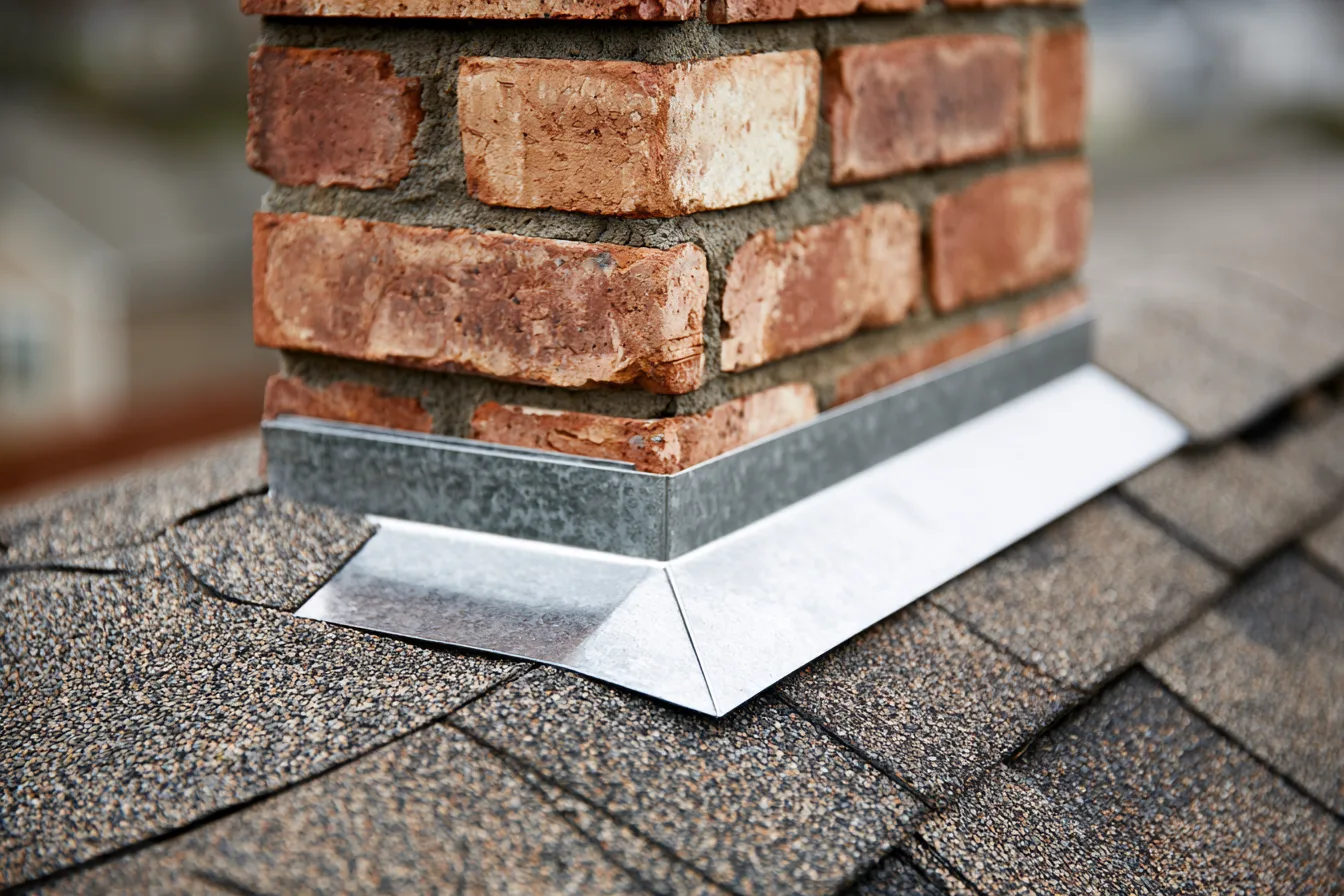
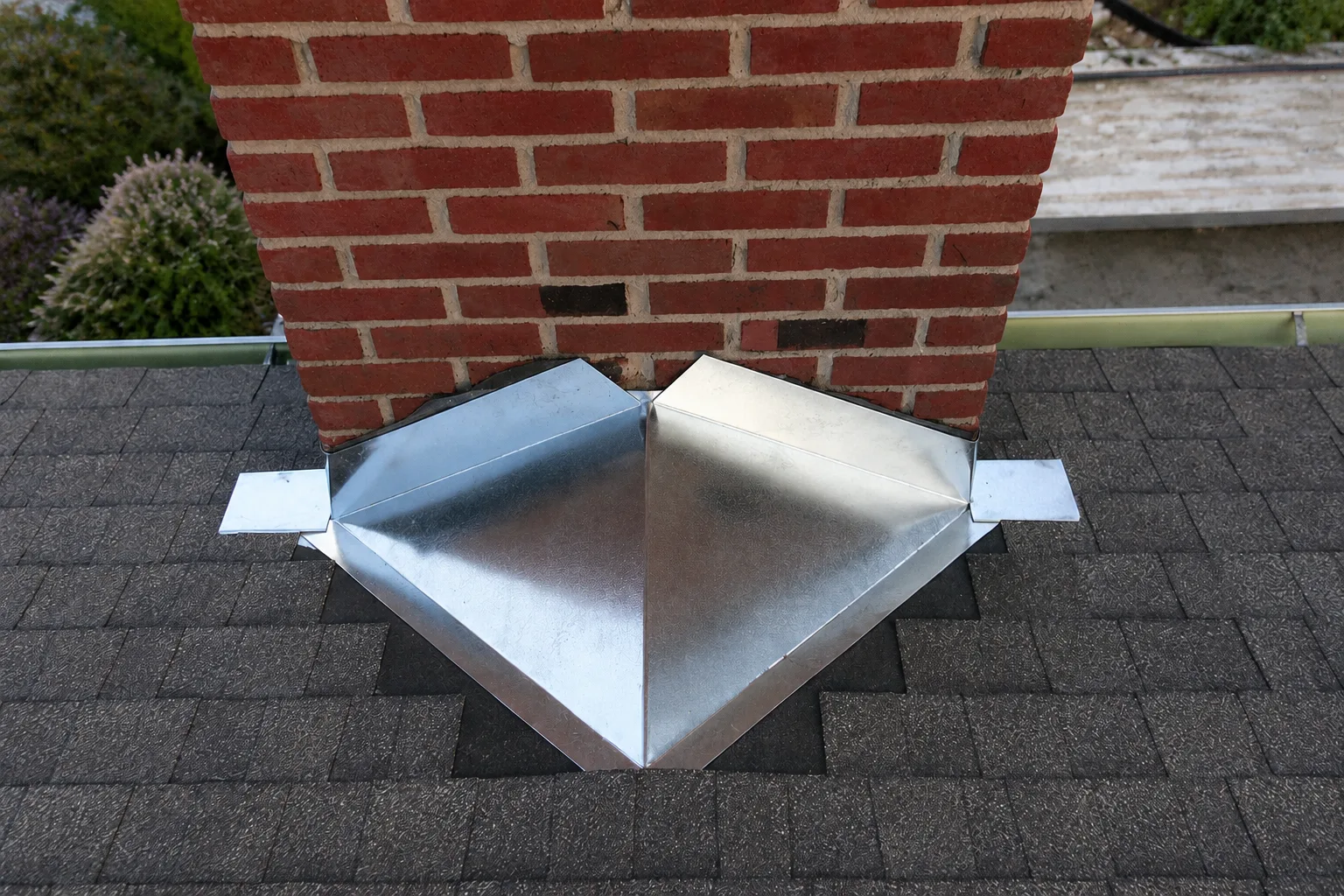
Flashing redirects water where a simple run of overlapping shingles stops. At a wall it needs to work with each course; around a chimney it needs to handle water above, beside and below the masonry. When metal is missing, pulled away or incorrectly lapped, a surface bead of sealant does not recreate that path. We examine how the joint was built and how it connects beneath the covering.
Roof Flashing Repairs at Different Connections
The joint determines the method.
- Walls and chimneys
Step flashing interweaves with courses; counterflashing protects upper edges where the detail calls for it. The repair may need to open adjoining shingles and address the wall-side termination.
- Vent pipes and roof openings
A pipe boot combines a collar around the pipe with a base integrated into the covering. Both pieces and their connections matter. Replacing only a collar does not resolve a failed base or lap.
- Valleys and edges
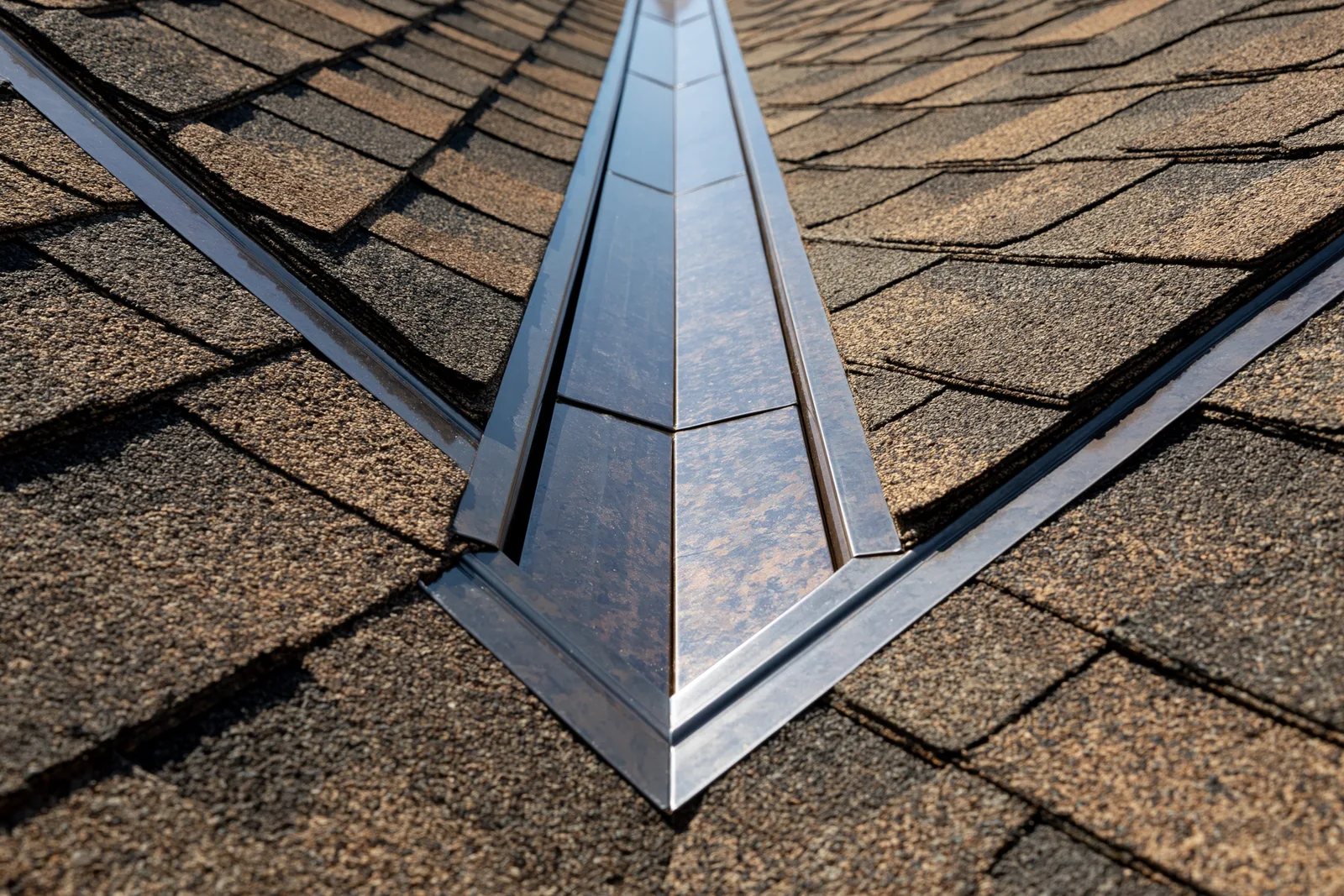
Valley and edge details need a continuous path toward drainage. Repair work must maintain correct laps and avoid trapping water beneath adjacent layers.
What Changes a Flashing Repair Scope
The visible gap is only part of the connection. A compatible lasting repair needs enough room to rebuild the layers.
A useful roofing estimate
Adjoining shingles
Brittle or incompatible covering can force wider removal around the flashing.
Deck and wall-side condition
Weakened wood or a failed termination adds work beyond replacing a metal strip.
Access and geometry
Steep roofs, tall chimneys and multiple roof intersections change access and labour.
Scope, materials and terms belong together in the proposal.
Roeland Park Roofing Co
Talk With Us About Your Flashing Repair
Tell us where the property is and what needs attention. Call (913) 270-1748 or request a free inspection. We can start with what you have noticed and work through the options from there.
(913) 270-1748